
Dagny is an AI super agent built to run and grow a business. It works across the tools a company already uses, learns how the business operates, and takes action on the work that keeps it moving.
Before Dagny can do any of that well, it needs to understand the company behind the account. Avra, co-founder and CTO at avei.ai, wanted every new user to arrive with real business context already in place.
"Dagny is an AI super agent that runs and grows your business. For that, Dagny needs real context about each user's business, including its brand, tone, and design, retrieved straight from the internet during onboarding."
Brand context is part of onboarding
Dagny cannot feel like a capable extension of a team if it starts with a blank slate. From the first session, it needs to recognize the company's visual language and use that context consistently.
That means onboarding needs more than a company name. Dagny needs the right logo, a usable color palette, typography, and a style guide that reflects the business it is about to help run.
Dagny originally handled that work with an in-house brand extraction pipeline. The pipeline gave the team control, but it also left them owning an entire system that was not the core product.
One call replaced the pipeline
Dagny now calls Context.dev during onboarding. From a single API call, it receives the user's brand assets, including the logo, colors, and full typography style guide.
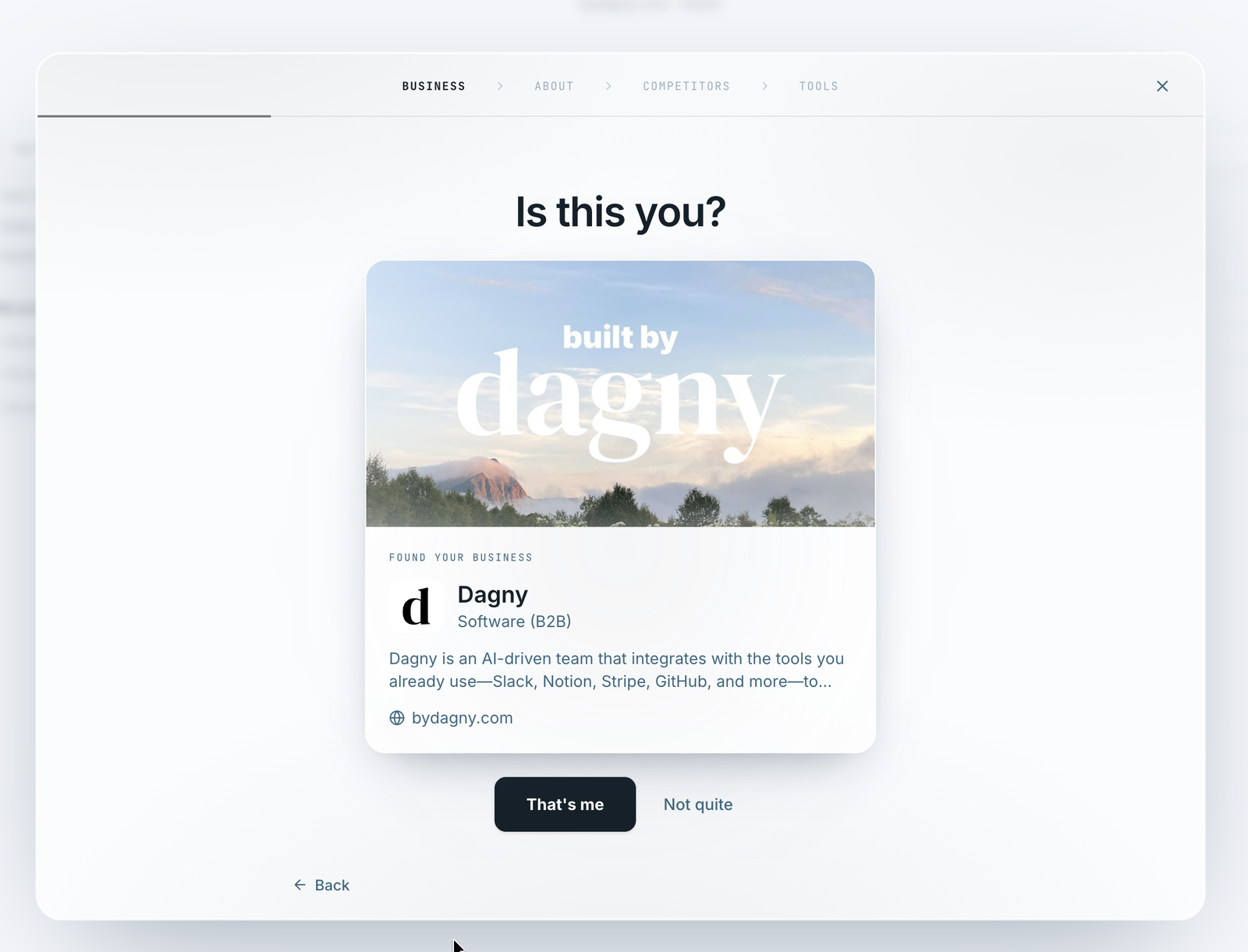
The change was small at the integration point and much larger everywhere else.
"Integration was super easy; it's literally just an API call. Easy enough that we deleted the entire in-house extraction pipeline."
Avra had Context.dev running in Dagny's onboarding flow within a few minutes. There was no long migration or parallel rewrite. The team connected the API, used the returned brand data as Dagny's context, and removed the system it replaced.
No fallback, on purpose
Dagny does not keep its previous extractor around as a safety net.
"Context.dev is now the only source, no fallback, on purpose."
That choice is what turns the integration into an infrastructure decision. Keeping a fallback would still mean maintaining, monitoring, and debugging the old pipeline. By making Context.dev the source of truth, Dagny removed that maintenance surface instead of merely adding another provider beside it.
The result is a simpler onboarding architecture and a stronger starting point for every new account. Dagny gets the brand context it needs, users see a product that already understands their business, and the team stays focused on the agent itself.
The outcome
- A few minutes to integrate: Context.dev was running in Dagny's onboarding flow almost immediately
- One API call: Each business arrives with its logo, colors, and typography style guide
- No fallback pipeline: Context.dev is the only brand context source by design
For Dagny, the best brand extraction pipeline turned out to be the one the team could delete.
Building an agent that needs to understand every new customer's business from the first session? Context.dev turns a company website into structured brand context through a single API call.