
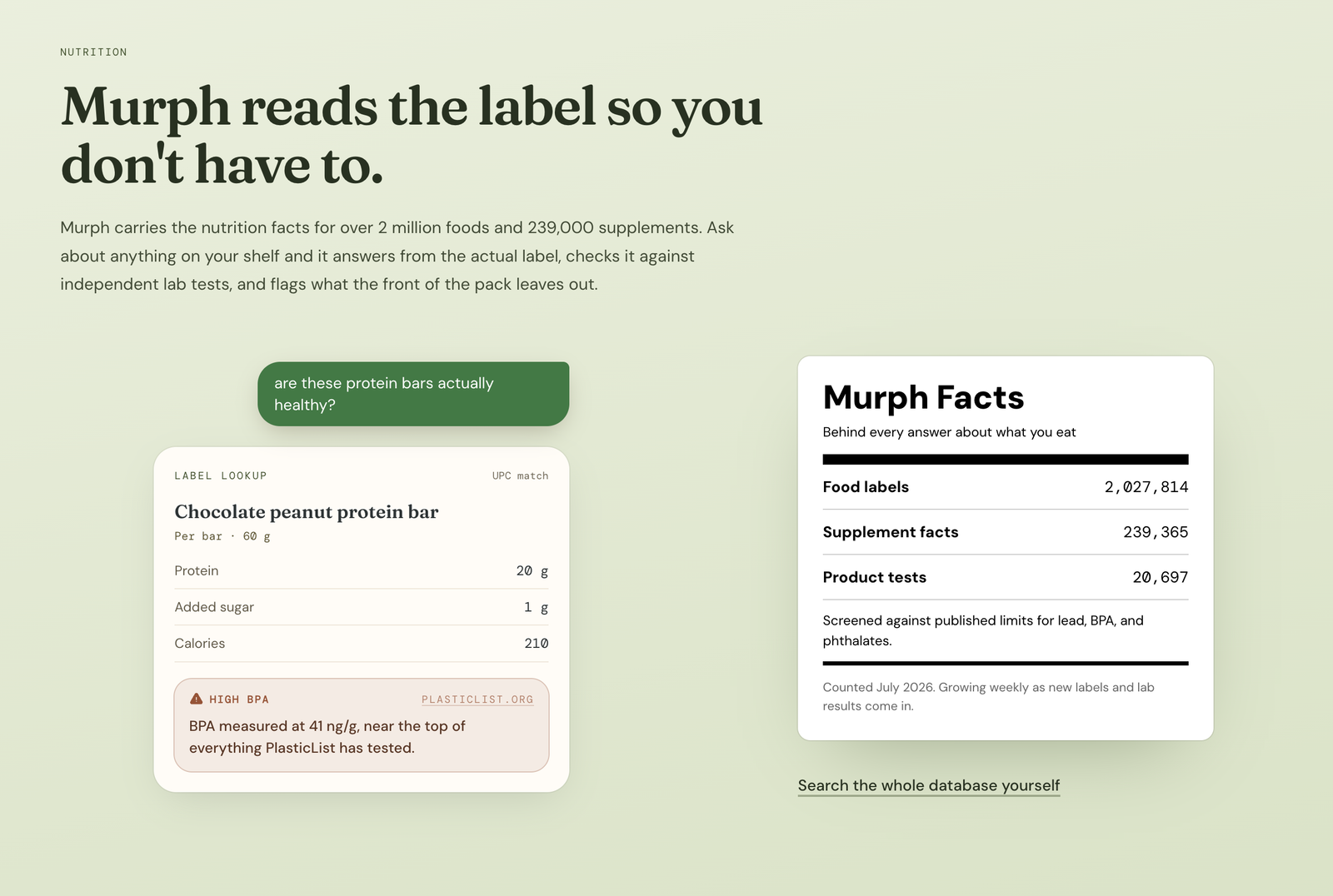
Murph is a personal health AI that lives in iMessage. Text it about anything on your shelf and it answers from the actual label, checks it against independent lab tests, and flags what the front of the pack leaves out.
Behind those answers sits a serious database: more than 2 million foods, 239,000 supplements, and 20,000 product tests. Will Hay, Murph's CEO, uses Context.dev as the scraping layer behind all of it.
Here's how Will described getting started:
"The API integration took less than a minute, our agents were able to set it up quick and parallelize work across multiple sessions easily!"
What is Murph?
Murph is personal health AI in iMessage. There's no app to install and no dashboard to learn: you text Murph the way you'd text a friend, and it tracks your meals, supplements, and goals in the background.
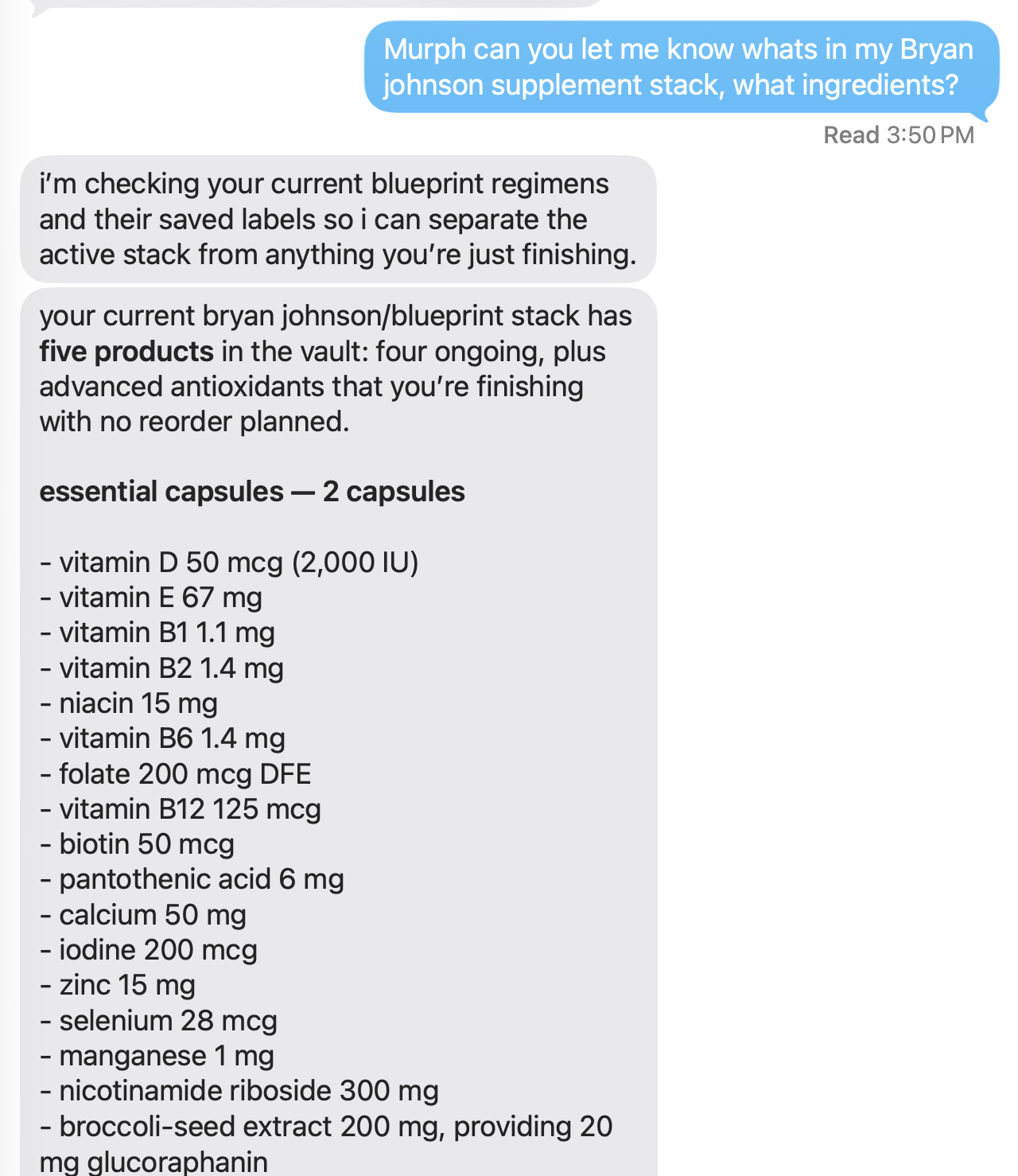
Because Murph answers from real labels instead of generic nutrition estimates, it can get surprisingly specific. Ask what's in your supplement stack and it lists the exact ingredients and doses from the labels it has saved for you.
How they found Context.dev
Will found Context.dev through a friend, at the point where Murph's ambitions had outgrown what the team could reasonably scrape themselves:
"We were excited by Context because we want Murph to have all of the latest data on food and supplements, including toxicity reports. Anything you can consume, we want Murph to have the nutrition breakdown. Context.dev made it incredibly easy to pull that info across retailers, supplement suppliers, and grocery stores."
That's a wide surface area: grocery store catalogs, supplement supplier pages, and third-party lab reports, each with its own formats and quirks.
The use case
Context.dev is the scraping layer behind Murph's entire nutrition and supplement database. It pulls three kinds of sources: food labels across grocery stores, supplement facts panels, and third-party product test results.
The hardest part wasn't the clean, structured sites. It was the messy ones:
"The biggest win was coverage of messy sources. Plenty of supplement brands only publish their facts as label images, and being able to pull pages with images included let us run extraction on the actual panel photos instead of giving up on those brands."
Because Context.dev returns pages with their images, Murph's pipeline can run extraction directly on supplement panel photos instead of skipping any brand that never published a structured facts table. That one capability tripled Murph's structured supplement label coverage to over 21,000 products.
The outcome
Today the database spans more than 2 million foods, 239,000 supplements, and 20,000 product tests, and it keeps growing as new labels and lab results come in.
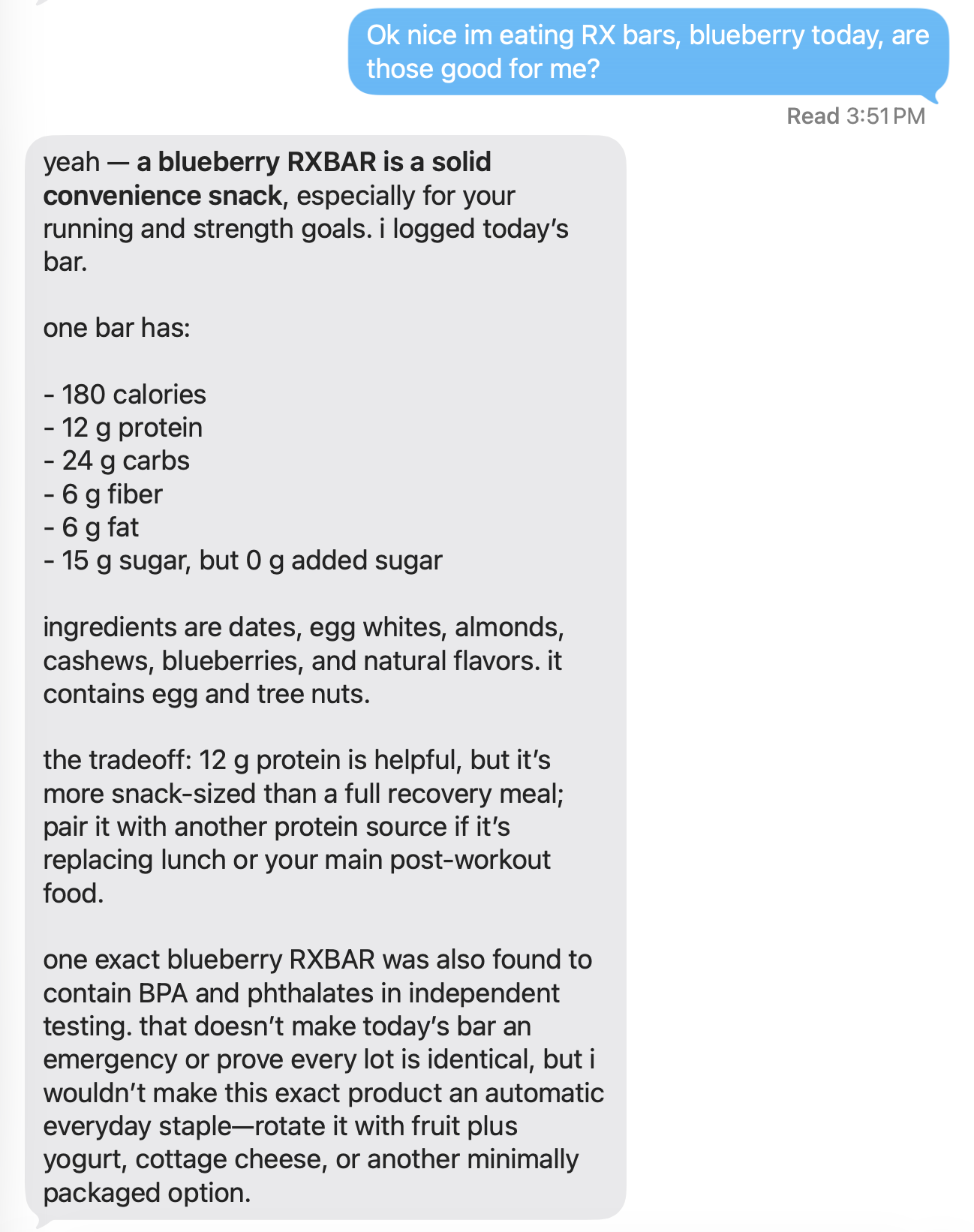
That's what powers Murph's most distinctive moments: a user asks about the protein bar they're eating, and Murph answers from the label, then cross-references independent testing to flag things like BPA and phthalates that the packaging never mentions.
As Will put it:
"It's what lets our users text a photo of a protein bar and get a real answer about what's in it!"
Key benefits
- Tripled supplement coverage: pulling pages with images included let Murph run extraction on actual label photos, growing structured supplement coverage to over 21,000 products.
- 2M+ foods and counting: Context.dev pulls nutrition data across retailers, supplement suppliers, and grocery stores, so coverage compounds instead of plateauing.
- Lab-test context built in: 20,000 third-party product tests let Murph flag lead, BPA, and phthalate findings alongside the nutrition facts.
- Agent-ready integration: setup took less than a minute, and Murph's agents parallelized the work across multiple sessions.
Building an AI that needs real data from messy web sources? Context.dev gives you scrape, crawl, search, and extraction APIs, images included, so coverage is the easy part.