For Sreejan, co-founder of Zaraftis, AI search optimization starts with understanding a brand's website. The team uses that content to create topics and prompts for tracking AI search visibility and to run site audits.
Context.dev supplies the page data behind both workflows. Zaraftis moved from Firecrawl after batch scraping became available and had the API running under real load within a few days.
What is Zaraftis?
Zaraftis is an AI search optimization company. Its platform helps brands track their presence in AI answers, compare competitors, and inspect the sources behind those answers.
To make that tracking useful, Zaraftis needs context about each brand. The pages on a brand's website give the team material for choosing relevant topics and prompts, while the underlying site data supports audits of how those pages are structured.
Turning website content into tailored prompts
Zaraftis uses Context.dev to scrape pages across a brand's website and gather the context that feeds its prompt tracking workflow. Sreejan describes the connection directly:
"We use Context.dev to scrape pages of a brand's website to gather useful context and use to create tailored topics and prompts for tracking AI search visibility. Our site audits are also based on the site data scraped by Context.dev."
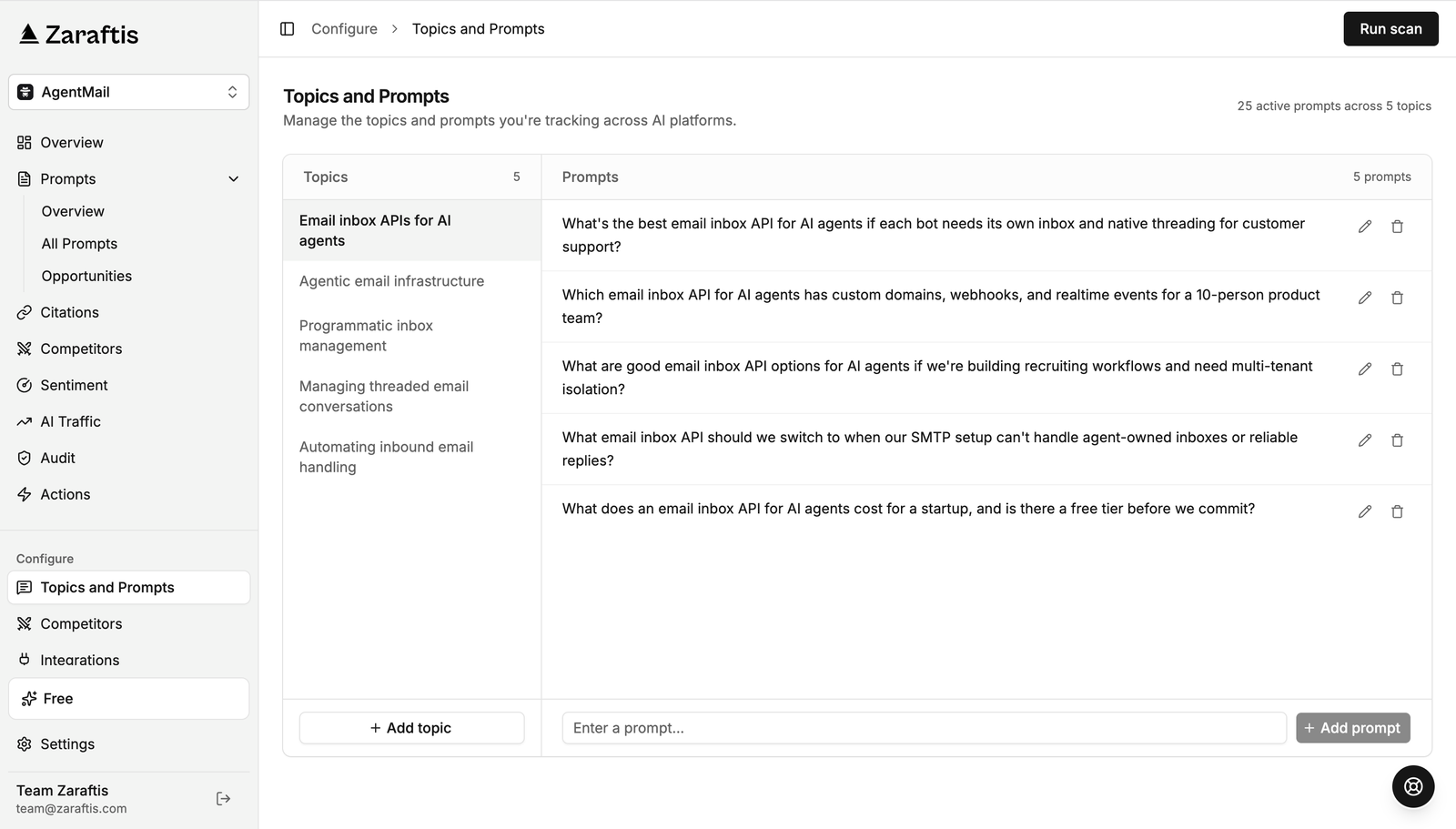
The Topics and Prompts view below shows that workflow for AgentMail. Topics such as email inbox APIs for AI agents and programmatic inbox management organize the questions Zaraftis tracks across AI platforms.
Batch scraping prompted the move from Firecrawl
Sreejan discovered Context.dev through Yahia's posts on X while looking to migrate from Firecrawl. He found Context.dev more affordable, and the launch of batch scraping gave him the feature he needed to make the switch.
"I wanted to migrate from Firecrawl. Context.dev proved to be more affordable. The moment the batch scrape feature was launched, I jumped ship."
Batch scraping fit Zaraftis's need to gather content from multiple pages of a brand's website. The same page data could then support both prompt creation and site audits.
Running under real load within a few days
The team integrated the API and had it running in production testing within a few days. Sreejan described the start as smooth:
"Very smooth. We had Context.dev running under real load within a few days."
From there, Zaraftis made iterative improvements as it tested real websites and edge cases. Sreejan reports that feedback about blocked-page handling and heading metadata was quickly addressed, helping the team work through the issues it encountered during testing.
More complete data for site audits
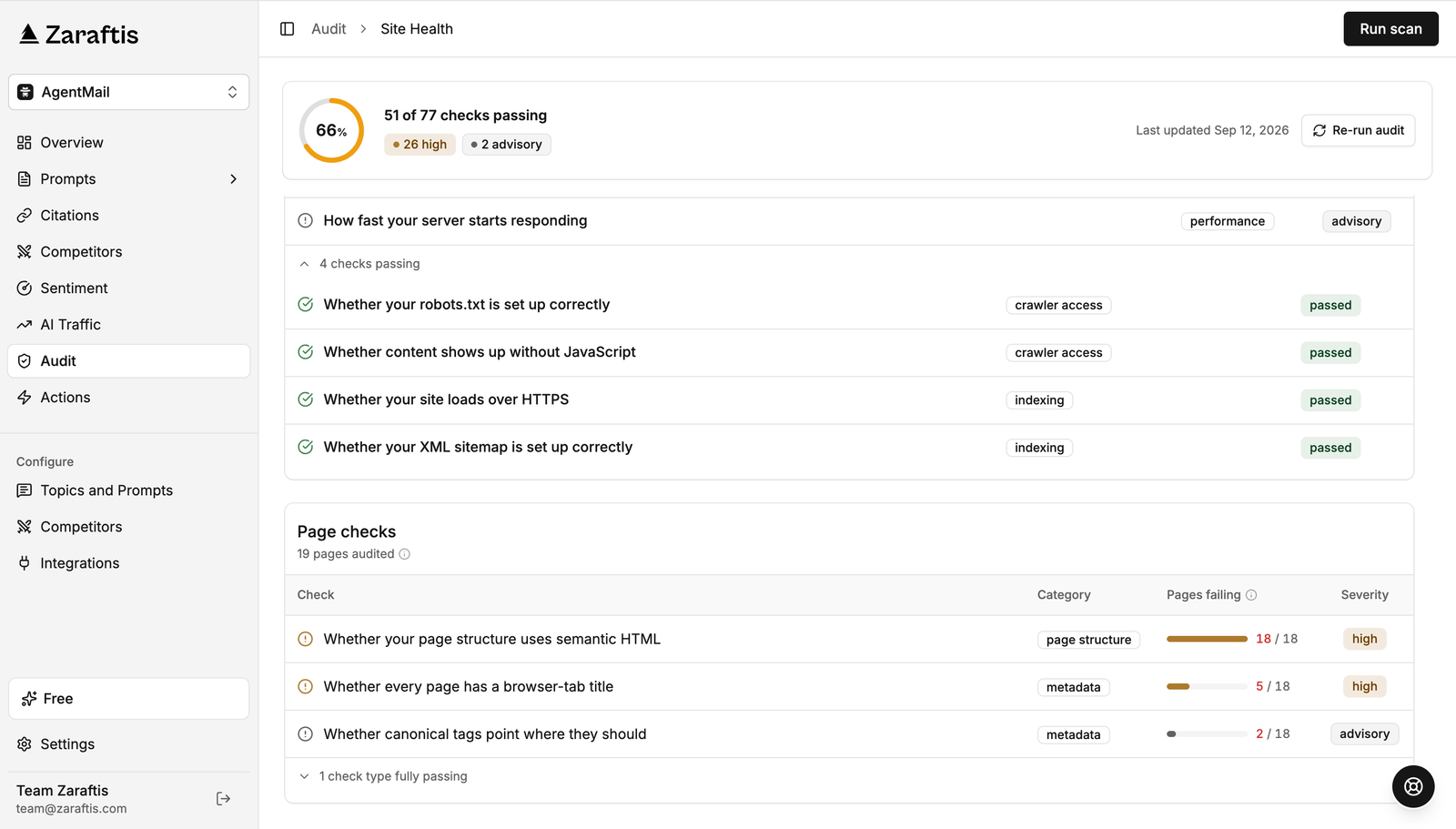
Zaraftis's site audits also depend on the data Context.dev returns. The Site Health view below brings together checks for crawler access and indexing with page-level findings about semantic HTML, browser-tab titles, and canonical tags.
For Sreejan, the quality of the returned content mattered as much as getting the request through. Context.dev preserved full page content and JSON-LD on sites where Zaraftis had run into difficulties with Firecrawl. It also returned metadata that reduced the team's need to parse HTML themselves.
"Context.dev preserved full page content and JSON-LD on sites where Firecrawl struggled, provided useful metadata that let us remove much of our custom HTML parsing, and automatically refunded failed batch pages."
The outcome
Zaraftis now uses Context.dev for the website data behind two core workflows: tailored prompts for AI search visibility and site audits. Sreejan highlights several practical benefits from the switch:
- More complete page data: full page content and JSON-LD were preserved on sites where the previous provider struggled.
- Less custom parsing: returned metadata let the team remove much of its own HTML parsing.
- Automatic refunds for failed batch pages: unsuccessful pages were refunded during batch scraping.
- Responsive support: feedback on blocked-page handling and heading metadata was addressed quickly.
With the integration running within days, Zaraftis could test those benefits against real websites and continue improving the workflows built on that data.
Building a product that needs reliable website context? Explore Context.dev's web tools for the page content behind AI workflows and site analysis.