
We caught up with Barun Pandey, founder of Kelpi.ai, after he started using Context.dev inside Kelpi's ad creative workflow. Kelpi is building an AI-powered platform that helps small businesses launch Meta ads that actually turn a profit: it reads a business, generates on-brand ad concepts, launches campaigns on a safe daily budget, and keeps improving performance by killing what is burning money and scaling the winners.
Barun summed up the integration this way:
"Context.dev was easy to set up. The documentation was super, so my coding agent got pretty much everything working in one shot. It helped me move faster on Kelpi's agentic workflows for ad creatives."
What is Kelpi.ai?
Kelpi gives small businesses and DTC brands a practical way to run professional-quality Facebook and Instagram ads without hiring a full creative team or paying an agency a $3–5k monthly retainer. It positions itself as the "third option" between doing it yourself on a platform built for specialists and hiring an agency on a six-month contract.
The platform starts by reading a company's website, then turns that public brand surface into usable campaign material:

- Brand name, voice, colors, fonts, logo, and offer pulled straight from the website
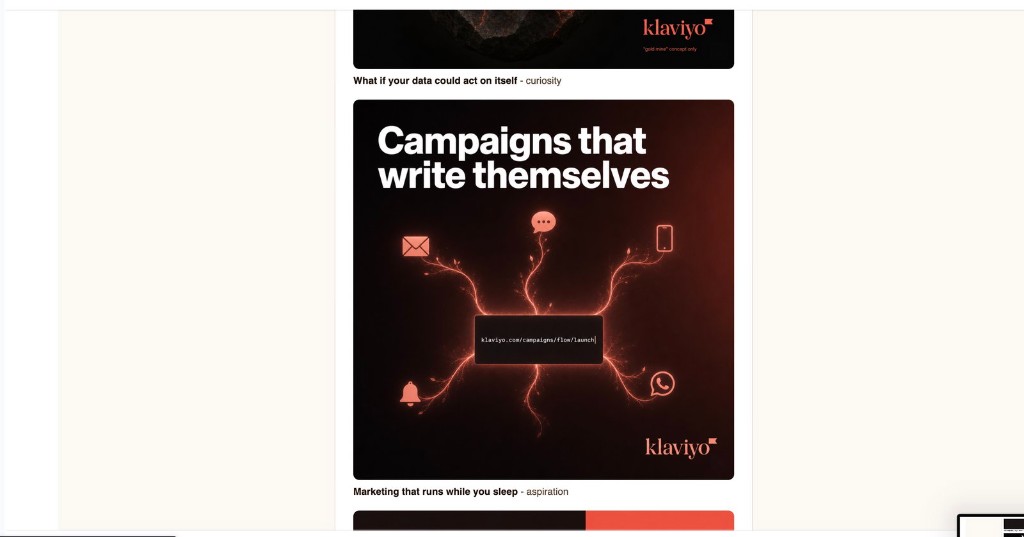
- Five to six distinct ad angles that each sell a different way: pain, aspiration, proof, and curiosity
- On-brand creative concepts rendered as finished ad images in the business's real palette and fonts
- A full Meta campaign, with the objective, targeting, and a safe $20/day test budget all set up automatically
- A daily read-only audit that surfaces wasted spend, fading ads, pixel issues, the best performer, and the next test worth running
- Simple swipe-to-keep control, where users keep the concepts they like and Kelpi only spends or launches when they say go
For a small business, that means Kelpi feels less like a blank ad builder and more like a virtual creative team that already understands the brand. No marketing knowledge required.
The Use Case
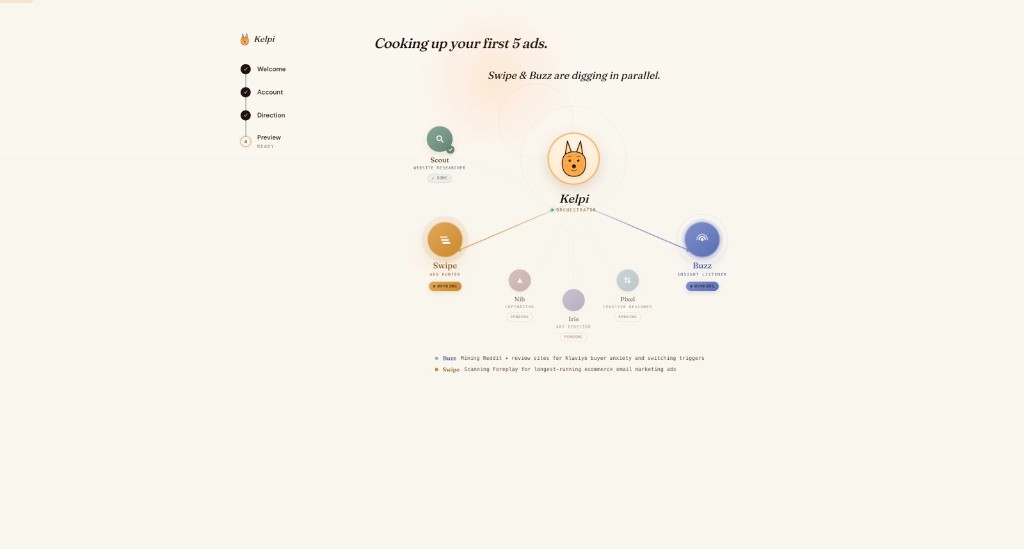
Kelpi is building a research-first ad generation flow. Before an ad creative agent writes copy or lays out a concept, it needs to understand the customer's startup, the surrounding industry, the competitive landscape, and the specific pain points worth turning into angles.
That workflow pulls together:
- Competitor ads
- Customer pain points
- Angle packs
- Startup and industry context
- Brand identity from the customer's website
Context.dev fits into the first mile of that system. Instead of asking a user to upload assets, describe their market, or paste brand guidelines, Kelpi can start from a domain and give its agents a much richer base layer to work from.
How Kelpi Found Context.dev
Barun found Context.dev on X while looking for ways to create better ads for Kelpi customers. Two things stood out immediately: the depth of information available through Context.dev, and the way Context.dev showed its own ad examples inside the product.
That combination made the use case concrete. Kelpi did not just need a logo fetcher. It needed context that an agent could reason with while researching, positioning, and generating creative.
As Barun put it, that depth was what pushed him to try it, and it immediately improved Kelpi's ad creation workflow.
Integration Experience
The setup was fast. Kelpi was able to lean on Context.dev's documentation heavily enough that Barun's coding agent could wire up almost everything in one pass.
That matters for a product like Kelpi because the team is not trying to spend weeks maintaining a brand-data pipeline. The core work is the ad workflow itself: research, angle generation, creative production, launch control, and optimization. Context.dev handles the brand and company context layer so Kelpi can keep engineering attention on the product experience.
Key Benefits
Context.dev helped Kelpi move faster while building agentic workflows for ad creatives.
For Kelpi, the biggest unlocks are:
- Less manual setup: Customers can start from a website instead of assembling brand files.
- Better research inputs: Agents get company and industry context before generating ad angles.
- More on-brand creative: Generated concepts can reflect the real business, not a generic template.
- Faster product iteration: The Kelpi team can build the campaign workflow without owning every brand-data edge case.
- A stronger first impression: Customers see ad concepts that already feel specific to their business.
Why Context.dev Worked Here
Ad generation is only as good as the context underneath it. If the system does not understand the business, the market, and the brand, the output looks like any other generic AI ad.
Kelpi is taking the opposite path. It uses research, customer pain points, competitor signals, and brand context before it asks agents to produce creative. Context.dev gives that workflow a dependable source of company and brand data from a simple domain lookup.
For small businesses, that means faster campaign starts. For Kelpi, it means the product can behave more like a creative team from the first session.
If you are building agentic marketing workflows and need reliable company context before your agents act, Context.dev is the layer that gets you from "generic output" to "this understands the business."