
We caught up with Lewis Carhart, founder of Comp AI, after he shipped something we didn't see coming: a fully on-brand sales deck generator built on top of Context.dev. He shipped it while Comp AI was simultaneously running our team through their SOC 2 platform.
"Just used context.dev to help codex build an on brand sales deck generator for us — came out really well!" — Lewis Carhart, founder, Comp AI
The Funny Part
Comp AI is the compliance automation platform Context.dev is using to run our own SOC 2. So the timeline went something like this:
- We're knee-deep in evidence collection inside Comp AI's app.
- Lewis pokes at the Context.dev API while we're poking at his.
- He hands Codex a prompt and walks away with a working sales deck generator.
- We get a Slack ping: "Just used context.dev…"
Two products auditing each other in production, basically.
What He Built
deck.trycomp.ai generates a personalized Comp AI sales deck for any company you point it at. Pass a domain (slack.com, linear.app, whatever) and the deck comes back styled to that prospect: name in the title, logo on the cover, colors threaded through the slides. The favicon, too.
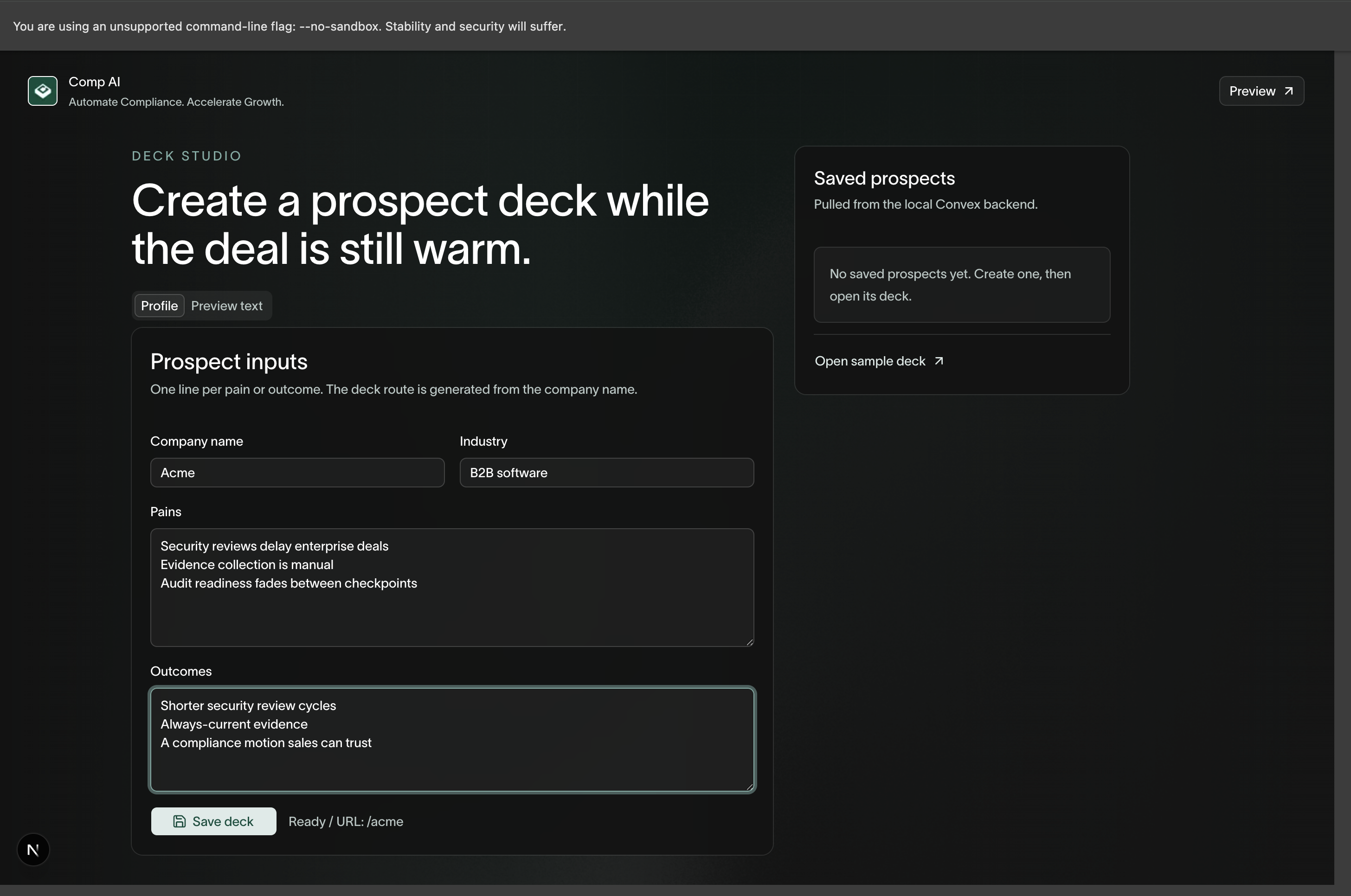
The whole thing is wired as a deck studio: drop in the company name, a few pains, a few outcomes, click "Save deck," and Context.dev does the brand fetch in the background. The output is a multi-slide, prospect-specific narrative ("Linear gets a complete SOC 2 path in one motion: AI setup, evidence automation, audit, pentest, and a buyer-ready trust posture") with all the visual chrome already on-brand.
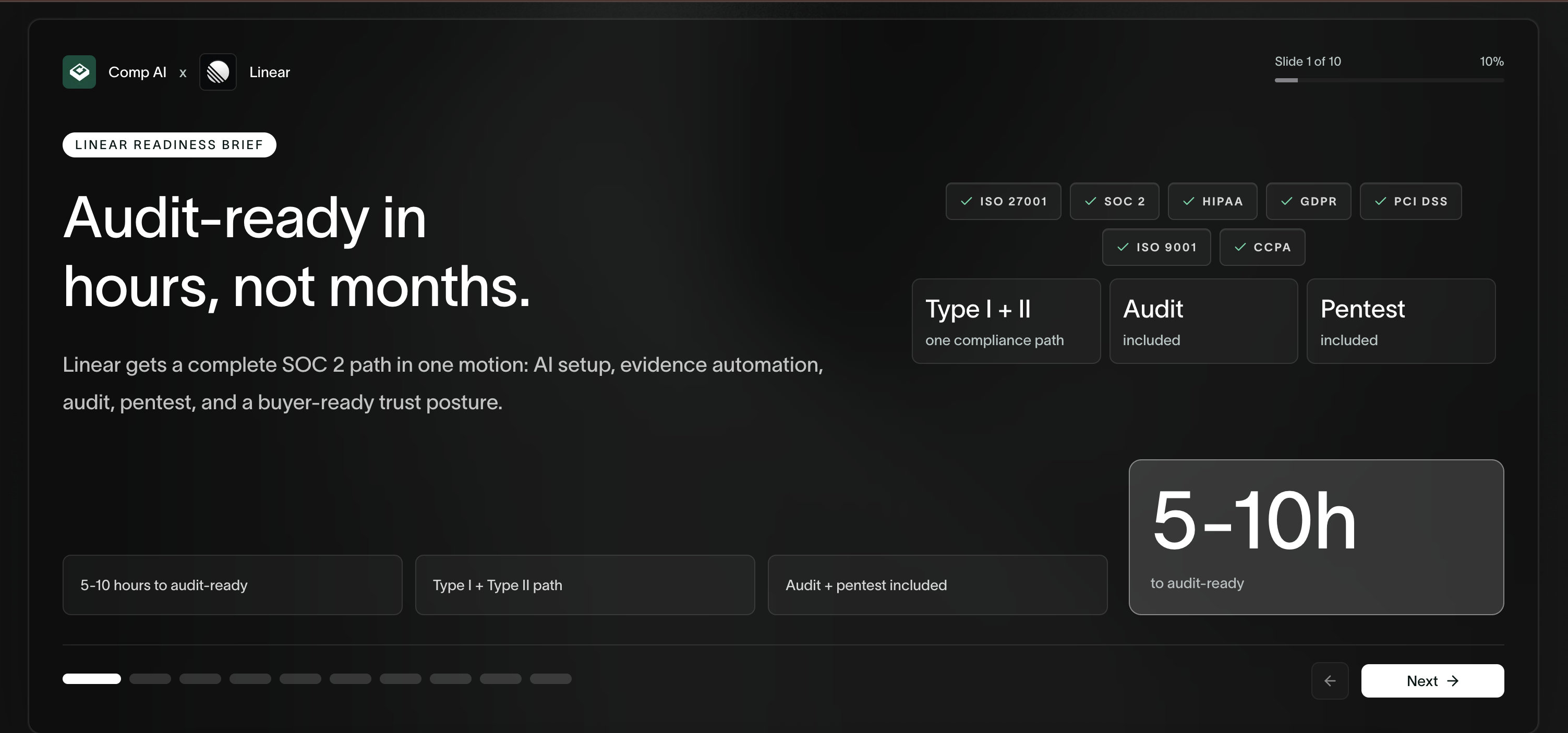
"favicon too lol" — Lewis, after we noticed the deck.trycomp.ai/slack.com page even renders Slack's favicon in the browser tab.
Why Context.dev Worked Here
Lewis's stack was Codex generating the deck templates and Context.dev supplying the brand layer. The split is the interesting part:
- Codex handles the narrative: pains, outcomes, slide structure, copy.
- Context.dev handles the visual identity: logo, palette, backdrop, favicon — all from a single domain lookup.
Without a reliable brand API, the visual half collapses into either a placeholder-heavy template (kills the "this was made for you" feel) or a manual asset hunt per prospect (kills the speed). With Context.dev's brand retrieve endpoint, the same code path that generates the Slack deck generates the Linear deck generates any deck — no per-prospect asset work.
A Note on is_nsfw
Lewis's first stress test was, of course, attempting to Rick-roll the generator on less than savory inputs (ahem, porn). Worth noting: the Context.dev API response includes an is_nsfw field on brand lookups, so deck generators (and any other product that ingests user-supplied domains) can filter the inputs they don't want to render. We mention this because someone always asks.
Why This One's Personal
Most case studies on this site are customers we onboarded through the front door. This one came together because two teams were already inside each other's products — Comp AI shipping our SOC 2, Context.dev powering Comp AI's outbound — and the integration shipped almost as a side effect.
If you're running outbound and your prospect-specific decks still look like the same template with a different logo pasted on, the Context.dev brand API is the layer that gets you to "wait, this was actually made for us" without a designer in the loop.
P.S. Check out Comp AI if you're a B2B software team that wants compliance automation that ships in hours instead of months — and check out deck.trycomp.ai to see the deck generator in action.