
Coding agents, shared protocols, and live web context are becoming practical building blocks. This guide ranks 16 agentic AI trends by the strength of their evidence and what builders can use today, with videos and practitioner posts published in 2026 alongside the analysis.
TL;DR
The ranking moves from durable shifts through early adoption to one clear hype-risk trend.
- Agentic coding and CLI workflows. Coding agents can complete multi-step development tasks.
- Multi-agent orchestration. Specialized agents divide complex work into bounded tasks.
- Agent interoperability. MCP and A2A connect agents with tools and other agents.
- Context engineering. Better inputs and memory make agent behavior more reliable.
- Verifiability and evaluation. Production agents require measurable checks for each action.
- Runtime security and governance. Autonomous access requires continuous policy enforcement.
- Dedicated agent infrastructure. Identity, permissions, memory, and observability support reliable execution.
- Live web data. Agents need current, structured information for grounded decisions.
- Browser agents. Interactive automation enables actions but faces anti-bot controls.
- Agentic commerce. Payment providers now support agent authorization and transactions.
- Vertical agents. Domain-specific integrations outperform general assistants in bounded workflows.
- Smaller task-specific models. Model routing reduces agent cost and latency.
- Enterprise workflow redesign. Companies are rebuilding processes around autonomous execution.
- Voice agents. Speech interfaces increasingly support transactional workflows.
- Personal assistants. Persistent memory enables cross-app tasks over multiple sessions.
- Agent-to-agent economies. Open discovery and marketplaces remain speculative without trusted identity.
What "agentic AI" means in 2026, and how this list was built
Agentic AI systems pursue goals through multi-step action. An agent interprets context, selects tools, executes a sequence of actions, and checks the outcome before continuing or stopping. A chatbot that produces one response does not qualify. Autonomy can remain bounded by permissions, approval gates, budgets, and other controls.
We ranked these trends by evidence strength, traceability to primary sources, and practical impact for builders. Product releases, technical papers, documented deployments, and verified practitioner accounts carry more weight than market forecasts or statistics repeated through secondary blogs. Current adoption and usable infrastructure rank above speculative potential.
Vendor results are labeled as vendor results, and forecasts are distinguished from measured adoption. Where a statistic could not be traced to sufficiently clear evidence, we left it out.
Each entry applies the same test for separating durable shifts from hype. We first identify the observable signal and its supporting evidence. We then explain the builder impact and assign a maturity level. Finally, we cover deployment limits and recommend a concrete next step. A trend ranks higher when builders can act on it now and verify that the required technology works outside a demonstration.
Comparison table: all 16 trends at a glance
| Trend | Maturity | Primary Builder Action | One-Line Evidence |
|---|---|---|---|
| Agentic coding | Growing | Match autonomy to review capacity | CLI agents now create pull requests |
| Multi-agent orchestration | Growing | Scope agents narrowly | Specialized agents divide complex workflows |
| MCP and A2A | Growing | Adopt protocols in stages | Major vendors support interoperability |
| Context engineering | Growing | Engineer context and memory | Agent quality depends on supplied context |
| Evaluation infrastructure | Growing | Build task-specific evals | Failures still require human review |
| Security and governance | Growing | Enforce least agency | Standards now address agent-specific threats |
| Agent runtime infrastructure | Growing | Add identity, state, and observability | Long workflows compound failures |
| Live web data | Mature | Use managed structured retrieval | Agents require current external information |
| Browser agents | Growing | Reserve browsers for interactive tasks | Anti-bot controls disrupt automation |
| Agentic commerce | Emerging | Implement mandate-based authorization | Payment networks launched agent protocols |
| Vertical agents | Growing | Integrate domain workflows deeply | Specialized agents serve regulated industries |
| Model routing | Growing | Benchmark each task by model tier | Smaller models reduce routine-step costs |
| Workflow redesign | Growing | Test agents in shadow mode | Enterprises are reworking operating processes |
| Voice agents | Emerging | Separate interface from authorization | Voice systems can execute transactions |
| Personal assistants | Emerging | Build persistent permissioned memory | Cross-app autonomy requires durable state |
| Agent economies | Emerging | Watch, but avoid dependencies | Open discovery lacks scaled deployment |
1. Agentic coding and CLI-native developer workflows
Agentic coding leads the 2026 trend list because developers already use coding agents for work beyond autocomplete. Claude Code, OpenAI Codex, and Google Jules represent the shift toward tools that inspect repositories, modify files, run checks, and help prepare pull requests. Claude Code's documentation describes this repository-aware workflow, and Anthropic's May 2026 session below covers the product's latest capabilities at that conference.
Coding agents operate through a five-step loop. An agent gathers repository context and plans a set of changes. It then writes or edits code, validates the result with tests and static checks, and delivers a commit or pull request. Failed checks can return the agent to an earlier step, which lets it revise its work without waiting for a new prompt.
Three deployment modes offer different levels of autonomy. Interactive CLI agents keep a developer involved in approvals and work well for individual contributors or small teams. Multi-agent systems divide work across concurrent agents but increase coordination and review demands. Background agents run queued tasks in cloud environments, which suits larger teams with mature testing, access controls, and isolated execution environments.
Adoption has moved faster than trust. In the 2025 Stack Overflow Developer Survey, 84% of respondents used or planned to use AI tools in development. Yet more respondents distrusted their accuracy (46%) than trusted it (33%). These figures describe AI development tools broadly; they do not establish that 84% of developers use autonomous coding agents.
Agentic coding remains a growing practice rather than a safe default for unsupervised development. Small teams should start with interactive CLI agents and require normal code review. Larger teams can test background or multi-agent modes on bounded tasks after they establish automated tests, restricted credentials, and clear ownership for every generated pull request.
2. Multi-agent orchestration matures beyond single-agent pilots
Multi-agent orchestration is emerging as a practical pattern for dividing bounded work among specialized agents. A supervisor can assign implementation tasks to coding agents, while a separate reviewer checks tests and proposed changes. Parallel workers increase throughput, and the supervisor controls dependencies, retries, and escalation to a person.
Production research workflows show both the benefit and the operational cost. Anthropic's account of its multi-agent research system reports a 90.2% improvement over a single-agent baseline on its internal research evaluation. It also reports that multi-agent systems used about 15 times as many tokens as ordinary chat interactions. These are vendor measurements on a specific research workload, not a general productivity multiplier for coding teams.
Reliability sets a ceiling on long agent chains. If each step succeeds 95% of the time and failures are independent, a ten-step sequence completes without failure about 60% of the time. Checkpoints and retries can raise the completion rate, but they also add latency, cost, and duplicated actions. Short tasks with verifiable outputs therefore suit multi-agent execution better than open-ended assignments with many handoffs.
Orchestration concerns topology and control rather than communication standards. A supervisor-and-worker design fits tasks with clear ownership, while parallel agents fit independent research or coding jobs. Builders should start with two or three specialized roles, require machine-checkable outputs at each handoff, and measure review load before adding more agents. Multi-agent orchestration has growing maturity, but large autonomous agent networks remain difficult to operate reliably.
3. MCP, A2A, and the standardization of agent interoperability
Interoperability protocols let specialized agents share tools, delegate work, and exchange results without custom connectors for every pairing. MCP standardizes how an application gives an agent access to tools and context through a client-server interface. A2A handles collaboration between independent agents, so an agent can advertise capabilities, accept tasks, track their status, and return artifacts.
The protocols address different layers rather than competing for one role. MCP connects agents to tools and context; A2A coordinates work between separately built agents. A May 2025 protocol survey also examined Agent Communication Protocol (ACP) and Agent Network Protocol (ANP), but its proposed stages should be read as a historical research framework, not a required implementation sequence.
Enterprise participation makes A2A the strongest signal beyond MCP. Google launched A2A on April 9, 2025 with more than 50 technology partners. The list included Atlassian, PayPal, Salesforce, SAP, ServiceNow, and Workday. Google described A2A as complementary to Anthropic’s MCP and built it on established web standards. Agents publish JSON Agent Cards for discovery and coordinate around task objects that can run for minutes or days.
Protocol standardization remains a growing trend rather than settled infrastructure. Competing implementations can interpret authentication, capability descriptions, and error handling differently. Protocol compliance also cannot prevent an agent from choosing the wrong tool or passing unsafe instructions to another agent.
Builders should start with MCP where agents need consistent access to internal tools and data. Add A2A when separately owned agents must discover one another or delegate long-running tasks. The Agentic AI Foundation's August 2026 update confirms that IBM's Agent Communication Protocol merged into A2A in August 2025 and that A2A itself joined the foundation in August 2026. Builders should follow the current specifications rather than treating older protocol comparisons as a roadmap.
There is also a concrete governance signal: the Linux Foundation launched the Agentic AI Foundation on December 9, 2025, with MCP, goose, and AGENTS.md as founding project contributions. Shared governance strengthens interoperability work, while authorization and application reliability still require engineering.
4. Context engineering becomes a core agent-building skill
Context engineering is becoming a core agent-building skill because agents depend on the information they can access, retain, and verify. Anthropic's engineering guide treats context as a finite resource that needs selection and maintenance. Better instructions cannot compensate for missing source material or stale memory.
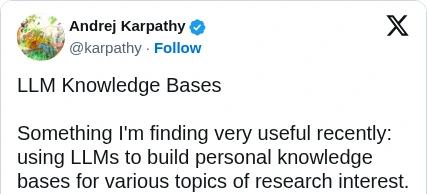
Andrej Karpathy's April 2, 2026 post on LLM knowledge bases describes using models to organize personal research. The builder implication is that context work extends beyond writing a prompt: applications must preserve useful source material and make it available when needed. Context engineering includes the source material, tool definitions, examples, constraints, and relevant history that make the task solvable. Evaluation then determines whether the result passes.
Larger context windows do not remove the need for selection. Loading an entire repository can bury relevant constraints among unrelated files. Persistent memory can also preserve outdated decisions across sessions unless the agent tracks sources and expiration.
Builders should set a context budget and retrieval rules for each task. Cross-session memory should record provenance, update conditions, and deletion rules. Prompt wording still matters, but production agents need disciplined context management more than repeated prompt tweaking.
5. Verifiability and evaluation infrastructure become the bottleneck
Production agent deployments increasingly run into an evaluation bottleneck even when models can perform the underlying task. Google Cloud's June 2026 session on agent quality presents an iterative process combining offline tests, trajectory evaluation, simulation, and analysis of production failures. Code supports execution and tests, while legal review or aesthetic judgment can require more costly human assessment.
Production evaluation must measure more than task completion. A coding agent may pass tests while introducing brittle abstractions, security problems, or unnecessary duplication. An enterprise agent can select the correct action but still present it in a way that users distrust. Builders therefore need end-to-end evaluations covering the model, application behavior, and human interaction.
There is no universal failure-rate threshold that makes an agent safe to deploy. An agent drafting internal notes can tolerate different errors from one approving payments. Anthropic's guide to agent evaluations recommends assessing both the outcome and the trajectory that produced it. Teams should set acceptance criteria around the consequences of a mistake and the review capacity they actually have.
Evaluation infrastructure remains a growing rather than mature practice. Task-specific datasets, reliable graders, and ongoing maintenance require sustained work. Synthetic test data and model-based judges can lower that burden, but they can reproduce the same blind spots as the agent under test.
Builders should define acceptance criteria before expanding agent autonomy. Start with representative tasks, record failure categories, and measure each release against the same suite. Keep a human reviewer until the observed error rate fits the task’s risk and review capacity.
6. Agent security and governance shift from checklist to runtime control
Agent security governance now reaches into runtime identity, authorization, and action control. NIST launched its AI Agent Standards Initiative on February 17, 2026, with security, identity, and interoperability among its priorities. The OWASP Top 10 for Agentic Applications provides a threat model for systems that can act through tools.
The OWASP framework covers risks including goal hijacking, tool misuse, identity and privilege abuse, and memory poisoning. The practical implication is that an agent can follow malicious instructions found inside a page, document, or tool response while holding legitimate credentials. Filtering the initial user prompt alone does not address that path.
Runtime controls can limit the damage when an agent interprets malicious content or misuses a tool. A deterministic policy layer should inspect proposed actions before they reach payment systems, databases, or deployment environments. Destructive, financial, or irreversible actions need explicit authorization, with human review when they exceed the approved scope. Audit logs should preserve the context, tool calls, permissions, and policy decisions needed to reconstruct an incident, while redacting secrets and limiting retention.
Builders should apply OWASP’s Least Agency principle. Give each agent only the autonomy and tools required for its assigned task. Assign every agent a distinct identity, issue short-lived credentials, and grant elevated access only when a task requires it. Standards remain incomplete, and controls cannot make autonomous execution risk-free. Per-agent identity and runtime authorization provide a practical foundation while the standards mature.
7. Identity, permissions, memory, and observability become dedicated infrastructure layers
An emerging AI runtime layer manages agents while they execute. Unlike orchestration frameworks, which arrange tasks and tools, a runtime preserves state, enforces permissions, isolates processes, and recovers interrupted work. Model serving handles inference, while the runtime monitors behavior across steps and can intervene when an agent stalls or exceeds a policy boundary. A recent AI runtime infrastructure paper formalizes this layer as operating above the model and below the application.
Compounding failures make runtime controls necessary for long workflows. Assuming independent failures, an agent with a 95% success rate at each step has about a 60% chance of completing ten steps without a failure because 0.95^10 is roughly 0.599. This is an illustrative calculation, not a measured production failure rate. Recovery, checkpoints, and idempotent actions change the practical outcome.
Several runtime components already have production precedents. Durable workflow engines preserve event histories so interrupted work can resume, while stable action identifiers help prevent retries from duplicating external effects. Process isolation and resource limits constrain execution. Identity and authorization also need explicit design; NIST's initiative treats them as research priorities for agent adoption.
Runtime maturity varies by component. Durable execution and process isolation are established techniques, while adaptive memory and autonomous recovery policies are less settled. Builders should start with checkpoints, idempotent tool calls, per-agent credentials, execution logs, and isolated workers before expanding automated recovery.
8. Live web data access becomes agent infrastructure, not a scraping side quest
Agents that answer questions about current prices, products, or events need a dedicated web retrieval layer. Retrieval services fetch pages and transform their contents for a model’s context window. Browser agents perform actions such as clicking buttons, maintaining sessions, and submitting forms. Those actions introduce separate problems around detection, authentication, and interrupted workflows.
Evaluate retrieval providers across five axes. The retrieval model determines whether a provider searches, crawls, or extracts specific fields. Freshness measures how quickly updated content becomes available. Structured output determines whether the model receives usable Markdown or JSON instead of raw HTML. Developer experience covers API predictability and integration effort. Scalability covers performance across large page and site volumes.
Managed retrieval is usable infrastructure, with different products serving different workloads. Context.dev converts URLs into Markdown or schema-shaped JSON and connects agents to current web content through MCP. Its managed API handles page fetching and extraction infrastructure, and browser actions can support interactive data collection. For a practical implementation, see our guide to building an AI web research agent.
Retrieval-only endpoints do not replace a browser workflow that must preserve authenticated state or complete a transaction. When comparing managed APIs and browser agents, distinguish actions needed to reach data from a persistent session that owns an entire interactive workflow. Our browser-agent comparison separates these use cases.
Classify each workflow as retrieval or action before choosing infrastructure. For retrieval workloads, test representative sites for freshness and schema consistency, then load-test expected volume. Reserve browser execution for workflows that require interactive state.
9. Browser agents confront the anti-bot wall
Browser agents face a different production problem than retrieval tools. They must click controls, fill forms, preserve login state, and complete multi-step flows. Managed crawl APIs can return current content without exposing an agent to every interaction required by a full browser session.
Anti-bot controls can reject browser agents before they reach the target page. Browser configuration, network reputation, interaction patterns, and site policy all affect whether a workflow is accepted. A successful demonstration on an unprotected page therefore says little about reliability across authenticated or heavily protected sites.
Verification challenges create a second failure point because an automated run may need a person to continue. Parallel tasks also need isolated authentication state: Playwright's browser contexts separate cookies and storage between sessions. Interrupted runs should preserve progress and offer a human handoff instead of restarting the entire workflow.
Browser action remains a growing rather than mature capability for hostile or heavily protected sites. Builders should reserve full browser-agent stacks for workflows that require logins, form submission, or transactions. When an agent only needs current page content, a retrieval or crawl API usually reduces operational complexity. Interactive deployments should isolate sessions, preserve recoverable state, and define a manual path for verification challenges.
10. Agentic commerce gets real payment rails and authorization protocols
By late 2025, major payment and technology companies had announced infrastructure for agentic commerce. Google introduced AP2 in September 2025, and the Consumer Bankers Association's January 2026 report examines the resulting authorization and consumer-protection questions. These releases provide technical building blocks for delegated transactions; broad consumer adoption is a separate question.
Google’s Agent Payments Protocol uses signed mandates to record what a user permitted. An Intent Mandate can specify constraints such as a price limit or merchant preference. A Cart Mandate connects that permission to a particular purchase. Visa’s Trusted Agent Framework adds verifiable agent credentials, while Mastercard’s Agent Tokens associate an agent with a consumer account and its authorization scope. OpenAI and Stripe’s Agentic Commerce Protocol limits credential exposure by passing approved payment information instead of giving agents unrestricted access.
Mandates could help issuers distinguish a valid delegated purchase from account takeover or malicious bot activity. However, merchants still rely on controls such as 3-D Secure, strong customer authentication, fraud scoring, and bot detection. Those controls may reject legitimate agent transactions because autonomous purchasing resembles automated abuse, as Davis Wright Tremaine explains.
Consumer liability remains an unresolved deployment issue. The CBA report asks whether giving an agent payment credentials could affect protections for an unintended transaction, rather than presenting the legal outcome as settled. A signed mandate records authorization, but it does not by itself resolve every dispute or determine liability.
Builders should encode purchase scope, spending limits, merchant restrictions, and expiration into signed mandates. Payment flows also need fallbacks for human approval when existing fraud controls challenge or block the agent. Agentic commerce has usable rails, but authorization evidence and liability rules still need to mature.
11. Vertical AI agents outgrow horizontal assistants in specific industries
Vertical agents are gaining traction where they can complete a defined industry workflow rather than provide general advice. Harvey's March 2026 Agent Builder announcement describes custom legal workflows with human review checkpoints. Abridge announced an enterprise-wide agreement with Mayo Clinic for clinical documentation and identifies Johns Hopkins Medicine among its deployments. These are vendor-reported examples, and documentation assistance should not be confused with autonomous clinical decision-making.
Vertical agents gain defensibility through four connected architecture layers. A domain data layer supplies specialized and current knowledge, while a tool layer connects the agent to systems of record. A workflow layer encodes how work moves through the industry. An evaluation layer tests outputs against field-specific standards. The tool and integration layer often requires the most sustained engineering because every customer uses different record systems, permissions, and legacy software.
That integration depth can support outcome-based pricing when an agent completes work that a customer previously assigned to an employee or contractor. Harvey's Agent Builder is a concrete 2026 example of the product direction: firms can encode their own templates, processes, and review requirements into reusable legal workflows. This is evidence of domain specialization, not proof that any particular pricing model will succeed.
Deployment evidence needs to be interpreted at the workflow level. A successful documentation assistant does not establish that an agent can independently diagnose a patient, and a legal drafting tool still needs appropriate professional review. Evaluate the actual action being delegated, the evidence available to check it, and the controls around customer data.
Builders should start with one bounded workflow that has accessible domain data and measurable acceptance criteria. Run the agent in shadow mode before granting execution rights, and test every integration under the industry’s actual permission and audit rules. Maturity is growing, but adoption still depends more on integration and evaluation quality than on general model capability.
12. Smaller, task-specific models and agent routing cut cost and latency
Model routing lowers agent cost and response time by matching each step to the least expensive model that can complete it reliably. A router can send classification, formatting, or routine extraction to a smaller model. It reserves a frontier model for ambiguous decisions and complex reasoning. Selective context loading also keeps simple steps from processing the agent’s full history.
Vertical agents provide a concrete version of this architecture. Retrieval supplies current domain knowledge, while fine-tuning can shape behavior on repeated tasks. Anthropic's routing pattern describes directing different inputs to specialized processing paths. A smaller model can handle a bounded, well-tested step while a larger model handles ambiguous cases.
Model routing is a growing pattern, but each additional tier creates routing and evaluation work. A cheap model can become expensive when errors trigger retries or human review. Poor routing can also send sensitive or difficult tasks to a model that lacks the required reasoning capacity.
You should benchmark accuracy, latency, and cost at the task level before choosing a default model. Start with a representative test set for each agent step, then compare model tiers against an acceptable error threshold. Escalate to a frontier model when a smaller model fails that threshold or detects low confidence.
13. Enterprise workflow redesign replaces point-tool adoption
Enterprises gain more from agents when they redesign a bounded workflow around autonomous execution. Adding an agent to an unchanged approval chain often preserves the same handoffs and delays. A redesigned workflow gives the agent a defined goal, permitted actions, escalation rules, and measurable completion criteria.
Builders can connect agents to legacy software through three practical patterns. API middleware lets an agent call existing systems without changing their interfaces. Shadow-mode operation lets the agent recommend actions while a person executes them, which provides real production data before autonomy expands. Wrap-and-extend integration places a modern API over legacy software so the agent can complete transactions without replacing the underlying system.
Commercial models can change with workflow ownership. An agent that completes a resolution, claim, or case can be priced against that outcome, but the unit must be defined carefully. Track successful completion, corrections, escalations, and total operating cost before deciding whether outcome pricing reflects delivered value.
This trend is growing, but legacy permissions and unreliable multi-step execution still limit deployment. Start one workflow in shadow mode, measure errors and escalations, and then grant transaction rights for steps that meet your evaluation threshold.
14. Voice agents move from IVR replacement to transactional interfaces
Voice agents remain an emerging interface for completing transactions rather than a mature replacement for every interactive voice response system. A conventional phone tree routes callers through fixed menus. A transactional voice agent interprets a goal, checks available options, and may execute a booking, payment, or account change. For example, ElevenLabs documents webhook tools that connect a voice agent to external APIs.
Transaction execution gives voice agents the same authorization problem as other commerce agents. A spoken request such as “book the cheapest flight” may omit a spending limit, refund requirement, or acceptable departure time. Google’s AP2 addresses such ambiguity through signed intent and cart mandates, while Visa and Mastercard use verifiable agent credentials to help payment networks distinguish authorized agents from malicious automation. These mechanisms support the underlying transaction regardless of whether the user gives instructions by voice, text, or an app interface. Current payment protocols still operate alongside fraud checks that may block legitimate agent activity.
Voice systems need evaluation under realistic call conditions. Measure response delay, speech-recognition errors, interruptions, noisy environments, and transaction completion in the same workflow. A convincing conversation demo does not establish that an agent can finish a consequential task accurately, which is why voice ranks below payment infrastructure in maturity.
Builders should treat voice as an interface choice over the same identity, permission, and mandate infrastructure used by other commerce agents. High-impact actions should require explicit confirmation of the item, price, and cancellation terms. Signed mandates should preserve what the user authorized so merchants and payment providers can audit disputed transactions.
15. Personal AI assistants approach persistent, cross-app autonomy
Personal AI assistants remain earlier-stage than enterprise vertical agents because they must preserve context across unrelated apps and long periods. A persistent assistant needs durable memory, checkpointed state, and a stable identity that survives session restarts. The runtime infrastructure covered in trend 7 provides those capabilities, but current implementations remain uneven.
Shopping illustrates both the opportunity and the unresolved boundaries. The CBA's agentic-payments report examines delegation across product selection and payment, while highlighting questions about authority, consumer data, and accountability. A useful personal assistant has to preserve the user's constraints throughout that sequence.
Trust and authorization remain unresolved. A cross-app assistant may need access to messages, calendars, accounts, and payment credentials, yet users need enforceable limits on what it can read or change. Commerce protocols can record purchase mandates, but the broader assistant category still lacks a common model for persistent permissions and accountability when an agent exceeds its instructions.
Builders should keep assistants within narrow, reversible workflows. Store explicit user preferences separately from inferred memory, require confirmation for consequential actions, and log every external action with the authorization that permitted it. The trend reaches maturity only when assistants can retain useful context without accumulating excessive access.
16. Agent-to-agent economies and open discovery remain speculative
Agent-to-agent economies rank last because current evidence supports a protocol direction rather than a market operating at meaningful scale. ANP proposes open discovery through decentralized identifiers and machine-readable capability descriptions. In theory, independent agents could find one another and exchange services without relying on a central marketplace.
A 2025 protocol survey places open agent networks beyond tool access and enterprise collaboration in its proposed roadmap. That is a research framing rather than proof of market adoption. The subsequent consolidation of ACP into A2A also shows why builders should treat early protocol taxonomies as snapshots.
ANP remains experimental, and the available evidence does not document broad production deployment. Open discovery still depends on trusted agent identity, scoped permissions, verifiable capabilities, payment controls, and ways to handle malicious or unreliable participants. The security and runtime infrastructure covered in trends 6 and 7 must mature before an open marketplace can support consequential transactions.
Builders should avoid basing production systems on assumptions about open agent marketplaces. Use MCP or A2A for bounded integrations with known counterparties, and limit ANP experiments to sandboxes or low-risk discovery prototypes.
Durable shifts vs. hype: how to read this list in late 2026
Infrastructure and evaluation maturity still lag model capability. Frontier models can plan and use tools, but production agents also need bounded permissions, durable state, observability, and task-specific evaluations. Builders should invest where those controls can make failures visible and recoverable.
A useful caution comes from Gartner's June 2025 forecast: it predicted that more than 40% of agentic AI projects would be canceled by the end of 2027, citing costs, unclear value, and inadequate risk controls. This is a forecast, not an observed cancellation rate. The practical lesson is to establish economics and evaluation criteria before expanding autonomy.
Build now when a trend has shipped standards, measurable evaluations, and clear human escalation paths. Watch when adoption depends on unresolved identity, liability, or cross-agent trust. Short, verifiable tasks remain the safer deployment unit because you can detect errors before one failed step contaminates the rest of an agent’s work.
FAQ
What is agentic AI versus generative AI?
Generative AI produces content in response to a prompt. Agentic AI plans and executes multiple steps toward a goal, often using tools, retaining state, and adjusting its actions based on results.
What is MCP, and how does it differ from A2A?
MCP standardizes how models access tools and context through servers. A2A standardizes communication between independent agents, including capability discovery, task management, and artifact exchange.
What makes an AI agent production-ready?
A production-ready agent completes a narrowly scoped task reliably and operates within defined permissions. You also need task-specific evaluations, traceable tool calls, failure recovery, and explicit authorization for consequential actions. Agent-evaluation guidance provides a practical starting point for measuring both outcomes and execution.
What is the biggest security risk with autonomous agents today?
Indirect prompt injection is a major risk because untrusted content can influence an agent that holds credentials or can invoke tools. The OWASP agentic security framework supports limiting autonomy, isolating tools, and enforcing permissions around consequential actions.
Should you build browser automation or use a managed data API?
Use browser automation when an agent must operate an interactive workflow or maintain a persistent authenticated session. For current web content and structured extraction, a managed API such as Context.dev reduces the need to maintain fetching and parsing infrastructure. Some managed APIs also support browser actions for reaching data, so compare the exact session and interaction requirements.