For Jason, founder and sole developer of TravelSmart, a useful AI travel planner needs access to the experiences people actually share online. Advice about taking the train in Tokyo or finding local food is more useful when it draws on travelers who have been there.
TravelSmart uses Context.dev to bring those discussions into its answers and to interact with pages that require more than a simple read. Jason had the integration working in three minutes with Codex.
Travel research inside one conversation
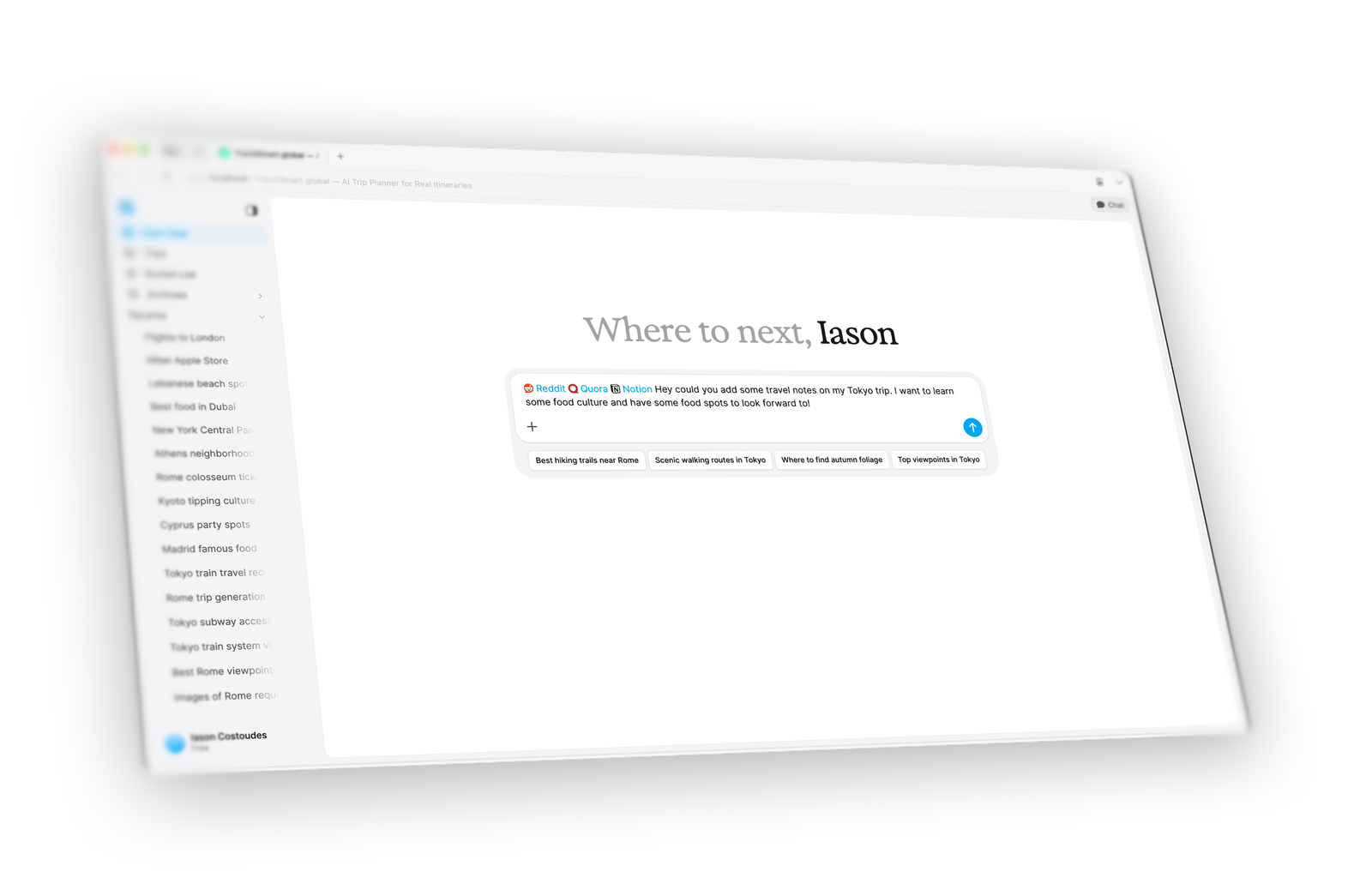
TravelSmart is an AI travel planner built around a simple ambition: bring the information a traveler needs into the product, without asking them to keep opening new tabs.
That means connecting questions to relevant sources, turning what people share into useful recommendations, and following up when a page needs interaction. The starting point is a conversation where a traveler can bring in connections such as Reddit and Quora alongside their own trip context.
Reaching the discussions that matter
Jason discovered Context.dev through Yahia's posts on X. Two things convinced him to try it: the ability to scrape the sites he needed and an Actions endpoint for pages that require interaction.
Reddit and Quora were particularly important. Jason reports that Context.dev let TravelSmart access those sites where his attempts with Exa and Firecrawl had not worked for this use case.
TravelSmart builds custom connections, or plugins, that target those sources. The scraped discussions give its AI models access to people's real opinions and experiences, grounding recommendations in more than a generic description of a destination.
"The ability to scrape these websites allows the answers from my AI models to be more accurate and grounded from people's real opinions and experiences. For a Travel Planner powered by AI this is a massive win."
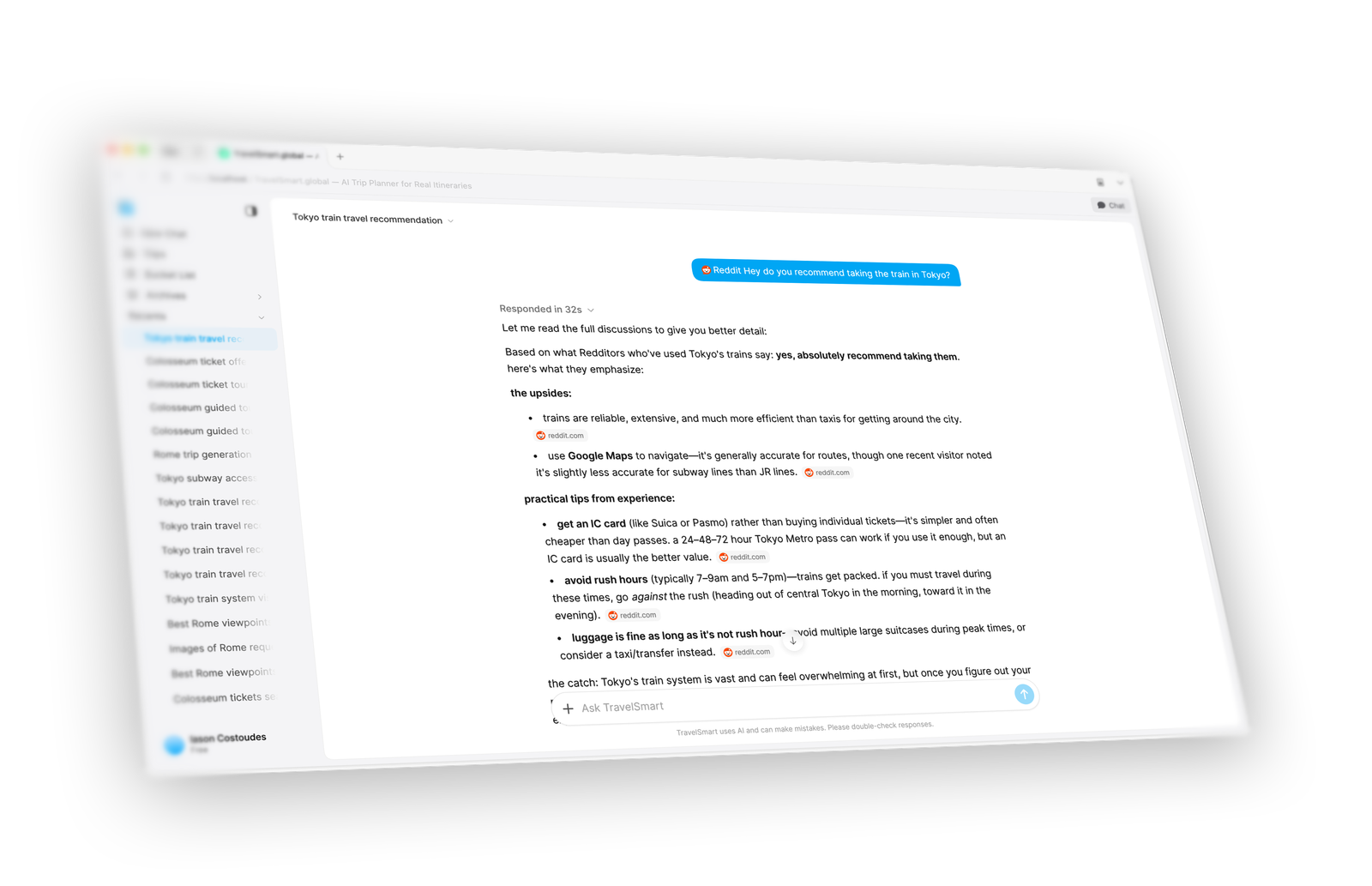
In the example below, a question about Tokyo's trains leads to advice drawn from Reddit discussions. The answer brings together practical details such as IC cards, rush hours, and traveling with luggage, with source references alongside the recommendations.
A working integration in three minutes
As the sole developer, Jason wanted to get the capability into TravelSmart quickly. He gave Codex the link and the API endpoints he wanted to use, connected his API key, and had the integration working.
"Took no joke 3 minutes with codex. I gave it the link and the API endpoints to use, hooked up my API key and got my integration working perfectly."
That short setup connected TravelSmart to the web content behind its travel research without becoming a separate infrastructure project for its founder.
Agent Mode follows through on interactive pages
Some travel questions require a website to do something before it can return useful information. Looking up tickets can mean choosing a date, navigating a booking flow, or submitting details.
TravelSmart uses Context.dev's Actions endpoint in Agent Mode to scrape and interact with those pages. Jason describes using it for tasks such as finding tickets and submitting information for a user.
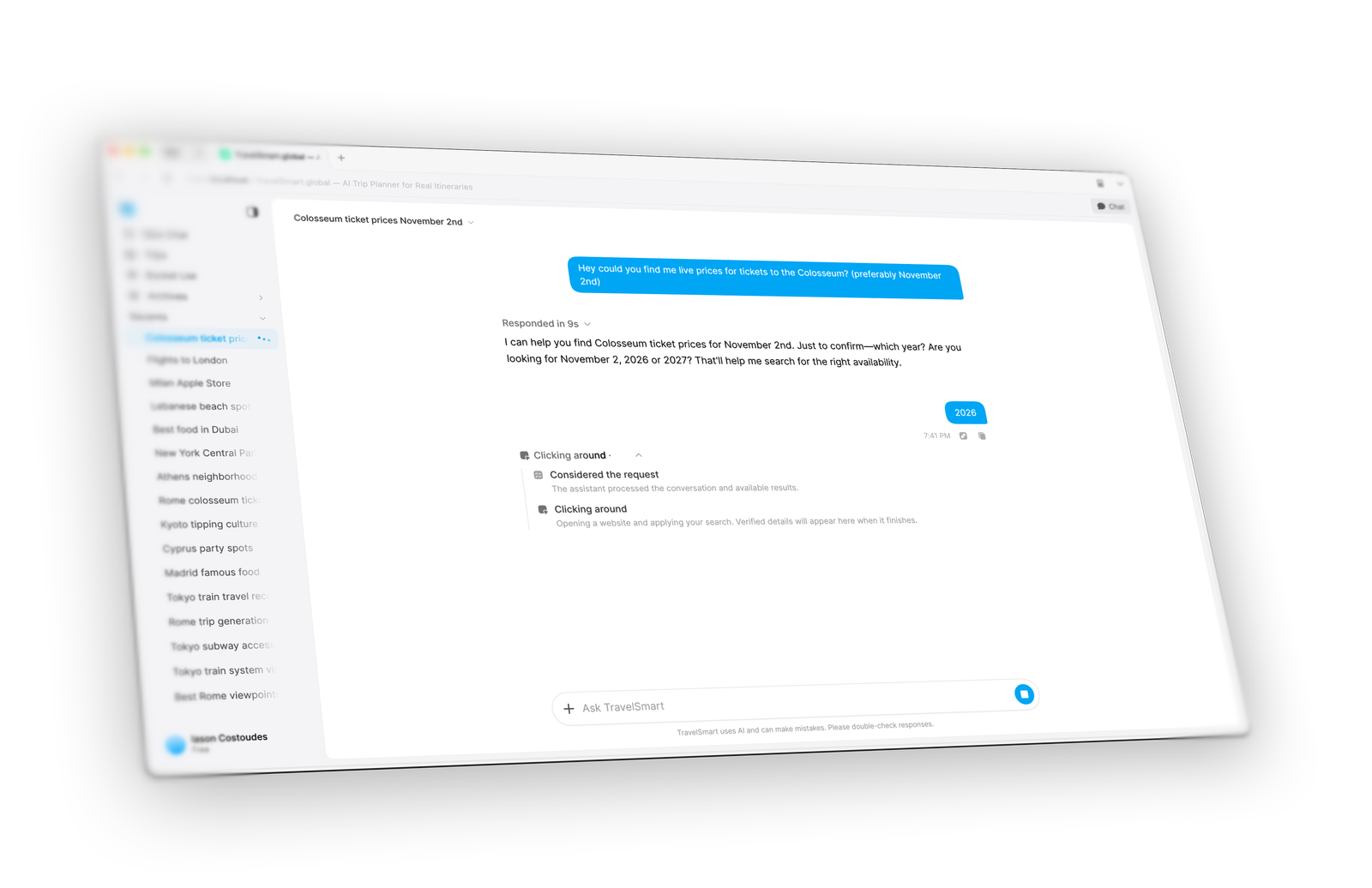
The Colosseum example starts with a request for live ticket prices for November 2. TravelSmart asks which year the traveler means before moving on to the website interaction.
The activity view makes that follow-up visible. It shows TravelSmart considering the request, opening a website, and applying the search. The ticket lookup is still in progress, with results to follow once the page interaction finishes.
A step toward delegating the whole task
For Jason, better research and page interaction support the same goal: let a traveler stay inside TravelSmart as the product does more of the work.
Context.dev gives TravelSmart access to community discussions for grounded answers, plus browser actions for pages that need interaction. Jason sees that combination as a step toward a more agentic travel planner, where users can delegate tasks that would otherwise require manual follow-up.
TravelSmart plans to expand its custom connections as the product develops. The direction is consistent: bring more useful information and more of the work into one conversation.