Spyglass helps marketing teams research brands, creators, ads, and the landing pages behind them. Its product brings those pieces together so a team can explore a brand's social presence alongside its campaigns and creative work.
For Caleb Tan, CTO of Spyglass, that experience depends on two things: finding the social accounts associated with a brand and getting usable content from its landing pages. Context.dev now powers both.
Getting there was straightforward. Caleb says switching from other providers took one LLM prompt per endpoint, and he estimates the migration took less than an hour in total.
Coverage gaps prompted the search
Before Context.dev, Spyglass had tried Brandfetch and Logo.dev. Caleb found Brandfetch's pricing too high for their needs and its coverage insufficient. Logo.dev also left coverage gaps. The team was separately maintaining a homegrown solution for social media enrichment.
Caleb first discovered Context.dev through a Google search, then received a recommendation from a mutual contact. That gave Spyglass another option to evaluate for the data behind its research workflow.
Connecting a brand to its social accounts
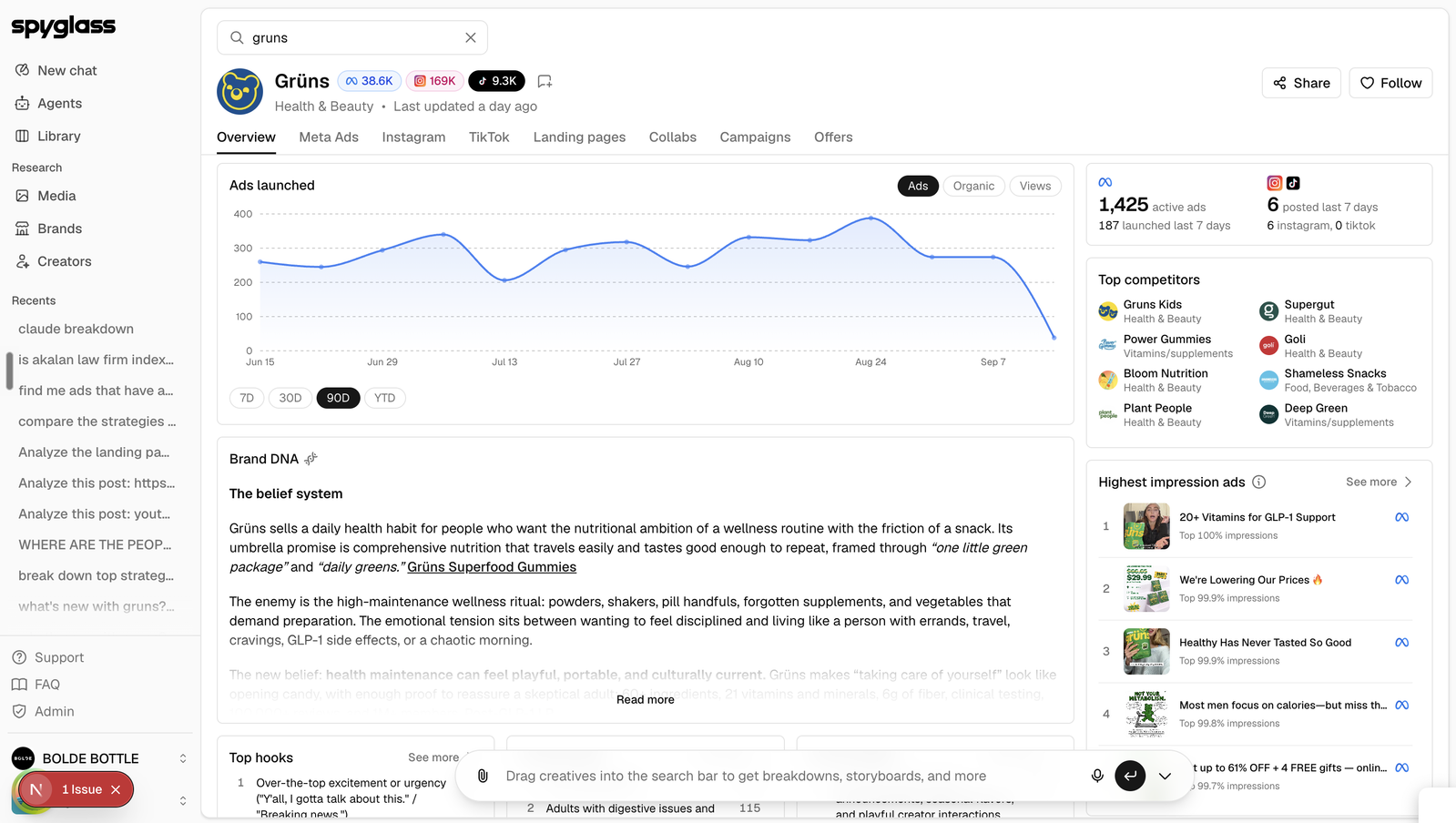
Spyglass uses Context.dev to find related social media accounts from a brand name, account name, or website. That enrichment helps connect a brand to its presence across social platforms.
The team moved this workflow away from its own implementation because Context.dev was more dependable. As Caleb puts it:
"We switched over from our home grown solution because context.dev was more reliable."
In Spyglass, account discovery feeds into a broader research experience. The brand overview below brings social profiles together with ad activity, competitors, and brand analysis.
Bringing landing pages into the research
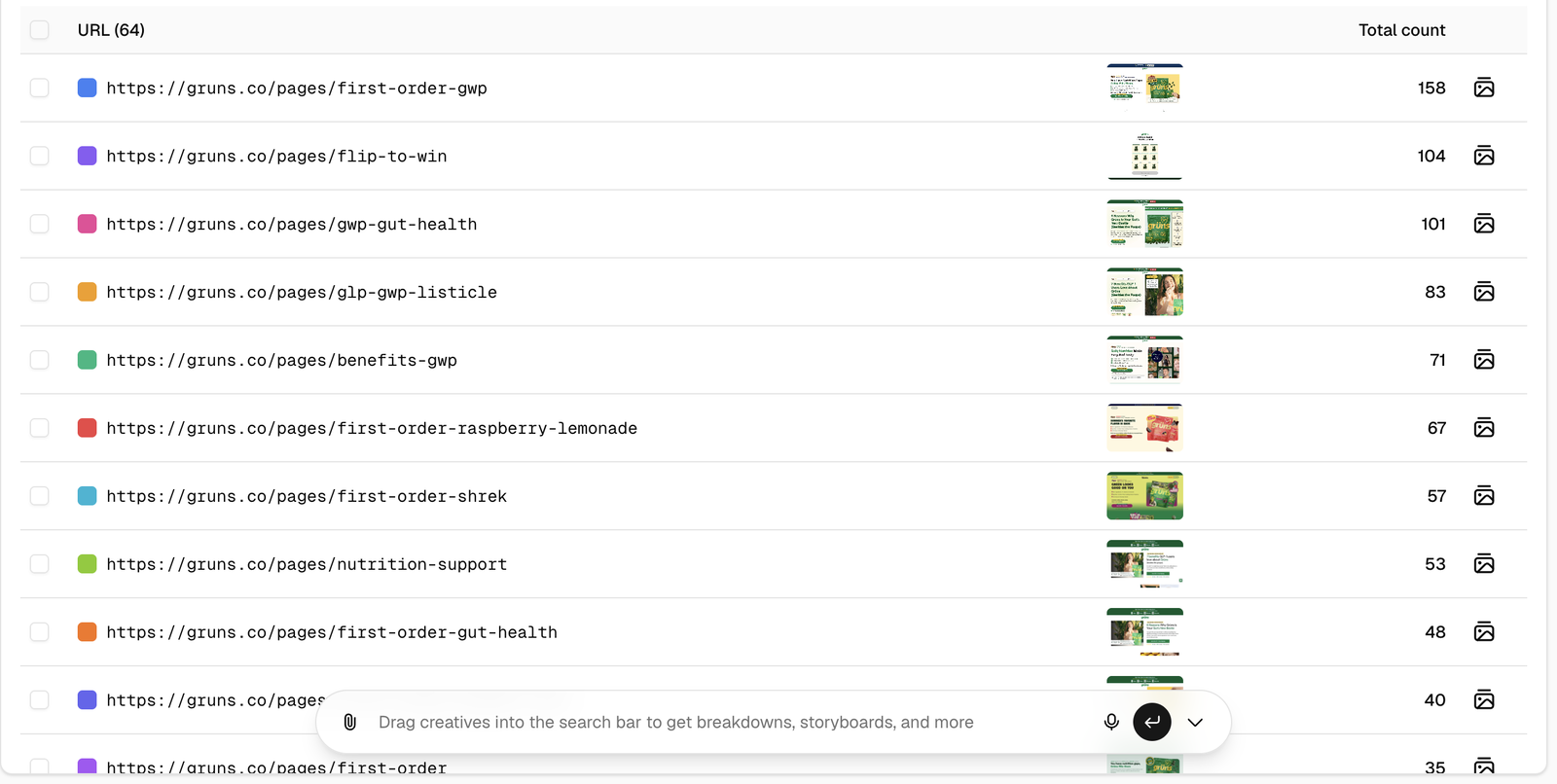
A campaign's landing page is another part of the picture. Spyglass uses Context.dev to capture full-page screenshots and retrieve landing page content as Markdown and HTML.
Those outputs give Spyglass both a visual record of a page and its underlying content. Caleb specifically highlights being able to retrieve them without getting caught up in CAPTCHAs.
The landing page view below shows how those pages appear inside Spyglass: URLs grouped in a table, with screenshot previews that make it easier to see the different destinations associated with a brand.
One prompt per endpoint
Caleb could test endpoints directly inside the Context.dev dashboard before integrating them into Spyglass. He then used the integration instructions with an LLM to make the switch.
"Super easy integration. Love the dashboard view that allows us to test endpoints in the app. Super easy to integrate the APIs (just copy/paste instructions and one prompt with LLM)."
That process carried through to the migration from Spyglass's other providers:
"switching over from our other providers to context.dev was literally one prompt per endpoint (probably less than an hour in total)."
The experience also included direct support from the team. In Caleb's words: "Team is super responsive and Yahia is great."
Two core workflows on Context.dev
Spyglass now uses Context.dev across both social enrichment and landing page scraping. The results Caleb describes are concrete:
- More reliable social enrichment: Context.dev replaced Spyglass's homegrown solution for finding related social accounts.
- Screenshots and page content together: Landing page scraping supplies full-page screenshots plus Markdown and HTML.
- A quick migration: One prompt per endpoint, with Caleb estimating less than an hour overall.
- Straightforward evaluation and support: In-app endpoint testing helped with integration, backed by a responsive team.
For Spyglass, Context.dev handles two recurring data needs behind the product: connecting brands to their social accounts and bringing their landing pages into the same research workflow.
Building a product that needs brand data and web content? Explore Context.dev for social profile enrichment, website screenshots, and page scraping.